

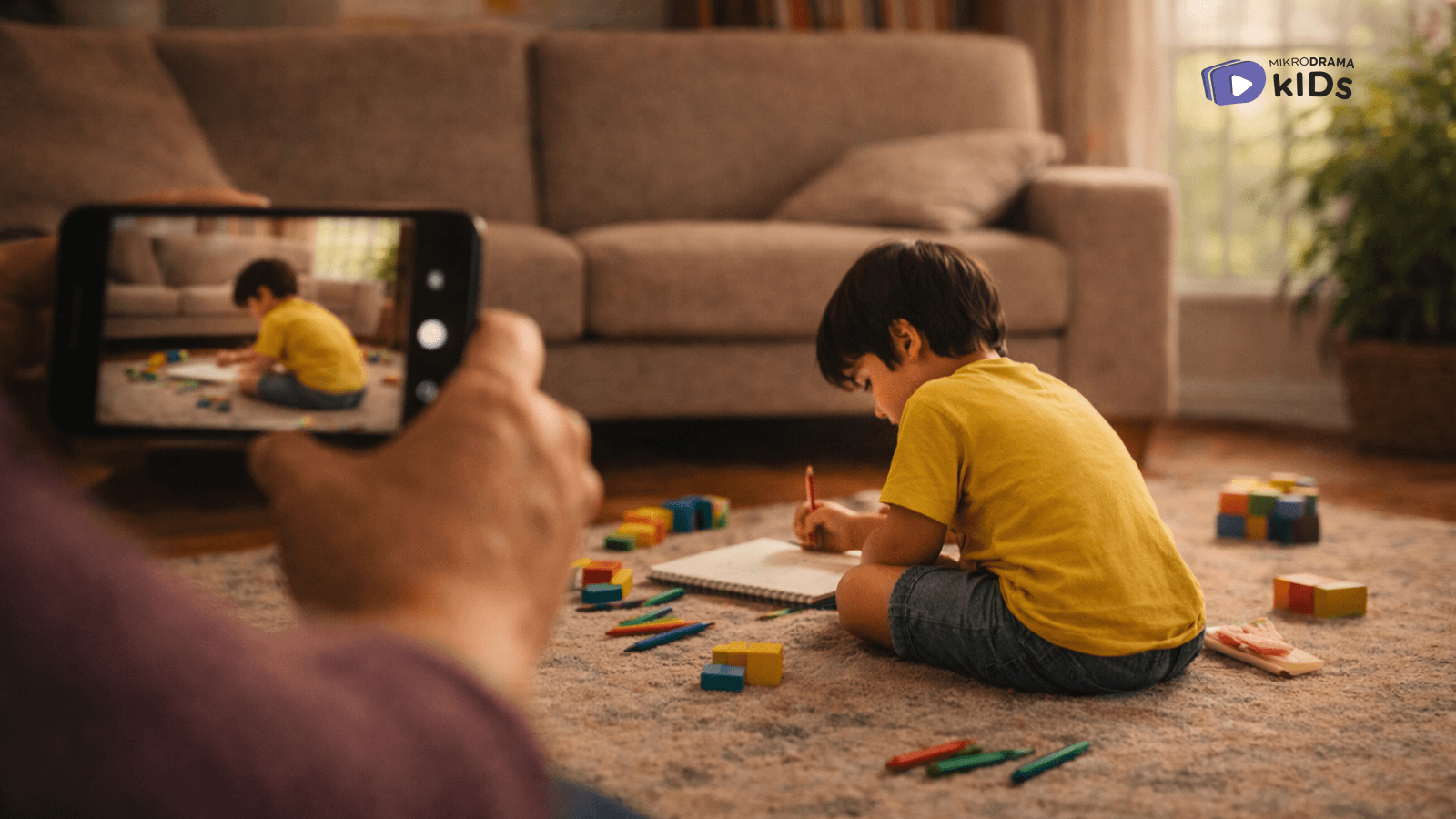
Before sharing your child online, pause. Childhood is not content — and the line between keeping a memory and building an audience around your child is thinner than ever.
There is something very innocent about watching a child laugh on camera.
A funny reaction. A cute dance. A clever answer. A small moment at home that makes everyone smile.
As parents, we understand the feeling. Sometimes our children do something so adorable, so funny, so full of life, that our first instinct is to record it and share it. Maybe with family. Maybe on Facebook. Maybe on TikTok. Maybe just to keep the memory.
But today, the line between keeping a memory and turning a child into content has become thinner than ever.
And that is where we need to pause.
Not because parents are bad. Not because every video is harmful. Not because children should be hidden from the world.
But because childhood is not content.
When a child becomes the product
Kidfluencing is when children become part of online content that attracts followers, attention, brand deals, sponsorships, or income.
Sometimes it starts small. A parent posts a child's funny video. People comment. The video gets shared. Then more videos are posted. The child becomes known. The audience starts waiting for the next cute moment, the next joke, the next reaction, the next performance.
Before anyone realises it, the child is no longer simply being a child.
The child has become the reason people are watching.
A recent article by Philippine Collegian made a powerful point. Kidfluencing often hides behind the image of family. It looks warm. It looks loving. It looks harmless. But underneath that, children's lives may be packaged, shaped, and shared for public consumption before they are old enough to understand what is happening.
That is the uncomfortable part.
A child may enjoy being filmed today.
But will that same child be comfortable with those videos when they are 13, 18, or 25?
Will they be happy that strangers watched their tantrums, their tears, their private family moments, their school life, their bedroom, their meals, their mistakes, their awkward growing up years?
We cannot only ask whether the video is cute.
We have to ask whether it is fair.
In Malaysia, we understand why this happens
In Malaysia, family is everything.
We love sharing our children's milestones. First day of school. Birthday parties. Hari Raya outfits. Sports day. Concert performances. Funny things they say in the car. Small victories at home.
For many parents, sharing these moments online feels natural. It feels like letting relatives, friends, and old schoolmates share the joy.
There is no bad intention.
But good intention does not always remove risk.
UNICEF Malaysia explains that many parents share children's photos and videos because they want to include loved ones in joyful moments, but parents must also understand the risks that come with posting children's content online. UNICEF also highlights the importance of respecting a child's views and teaching consent through the way we share.
That word matters.
Consent.
A small child cannot fully understand what it means to be searchable, downloadable, screen recorded, reposted, judged, edited, or remembered by the internet.
So when we post them, we are making a decision on their behalf.
That decision may follow them longer than we expect.
The internet does not forget like family does
At home, children can make mistakes safely.
They can cry, sulk, mispronounce words, dance badly, say something silly, throw a tantrum, learn, grow, and move on.
That is childhood.
But online, a moment does not always disappear.
It can be saved. Shared. Misused. Taken out of context. Turned into a joke. Used by strangers. Found again years later.
Malay Mail recently reported concerns from child protection experts that kidfluencing can create permanent digital footprints that children cannot control later in life. The same report also highlighted risks involving predators and unwanted attention, especially when children's personal details are repeatedly shared through vlogs and social media.
This is not about panic.
It is about awareness.
A school uniform can reveal a school. A birthday cake can reveal age. A house background can reveal location. A daily routine can reveal patterns. A "cute" emotional moment can become embarrassing later. A child's face can become part of a digital identity they never chose.
The internet does not treat children's memories the way a parent does.
A parent may see love.
The internet may see content.
When play starts to become work
This is another part many people avoid talking about.
If a child has to perform because followers are waiting, is it still play?
If a child has to smile because the camera is on, is it still natural?
If a child's bad mood becomes a problem because a video has to be posted, is it still childhood?
If income depends on the child appearing online, where is the line between family fun and child labour?
Researchers writing in the Journal of Business Ethics describe kidfluencing as a social media business where children can become the main influence over audience behaviour, while parents may build enterprises around their children's appeal. The study discusses the tension between rewards and risks, including children's rights, freedoms, and protection.
This is why some countries are already starting to respond.
Several US states have introduced or passed protections for child influencers, including trust accounts, record keeping, and the right for children to request content removal when they become adults.
The law is slowly catching up with something parents are already facing every day.
How much of a child's life should be public?
How much should be private?
And who gets to decide?
This is not about hiding children from technology
Let us be clear.
Children should be allowed to create.
They should be allowed to act, sing, dance, imagine, tell stories, make videos, learn digital skills, and express themselves.
The answer is not to remove children from creativity.
The answer is to protect them while they create.
There is a big difference between helping a child build confidence and turning a child into a brand.
There is a big difference between a child participating in a story and a child's personal life becoming the story.
There is a big difference between guided creativity and constant exposure.
This is where parents, platforms, schools, and content creators must be more thoughtful.
At Mikrodrama Kids, we believe children can enjoy digital stories without being pushed into endless scrolling. We believe children can be inspired by content without being overexposed by it. We believe children can learn, imagine, participate, and grow in safer digital spaces designed around their wellbeing, not around attention harvesting.
Because children do not need to be famous to be creative.
They do not need to be watched by strangers to be talented.
They do not need to become content to matter.
A simple pause before posting
Before we post a child, maybe we can ask ourselves:
Would I still post this if my child was old enough to fully understand it?
Would I be comfortable if this video resurfaced when they are a teenager?
Does this show their face, location, school, routine, or private emotions?
Is this for their benefit, or for engagement?
Am I sharing a memory, or am I building an audience around them?
Would I remove it immediately if my child asked me to?
These are not questions meant to shame parents.
They are questions meant to protect children.
Because many parents are trying their best. We are raising children in a world that changed faster than any parenting book could prepare us for. Our parents did not have to think about digital footprints, strangers saving photos, AI misuse, public comments, or algorithms pushing family content to millions.
But we do.
And because we do, we have to become more careful.
Let childhood belong to children
Children should have space to grow without performing.
They should have private memories.
They should have silly moments that are not turned into posts.
They should have bad days that are not uploaded.
They should have the right to become who they are without an audience watching from the beginning.
One day, our children will ask us what we protected for them.
Not just what we gave them.
Not just what we posted about them.
Not just how many likes their videos received.
They may ask whether we protected their dignity, their privacy, their safety, and their right to choose their own story.
So before you turn your child into content, pause.
Look at them not as a cute video.
Not as a potential influencer.
Not as a brand opportunity.
Look at them as a child.
And let childhood remain theirs.
Reference basis used: This article draws from the Philippine Collegian's recent discussion on how kidfluencing is normalised through family culture, UNICEF Malaysia's guidance on sharenting and consent, Malaysian reporting on child influencer risks, and recent international research and legal developments around child influencers and digital child labour.
Found this helpful?
This article is intended for general informational and educational purposes only. Please read our Blog Disclaimer.
.jpg&w=3840&q=75)

.jpg&w=3840&q=75)