

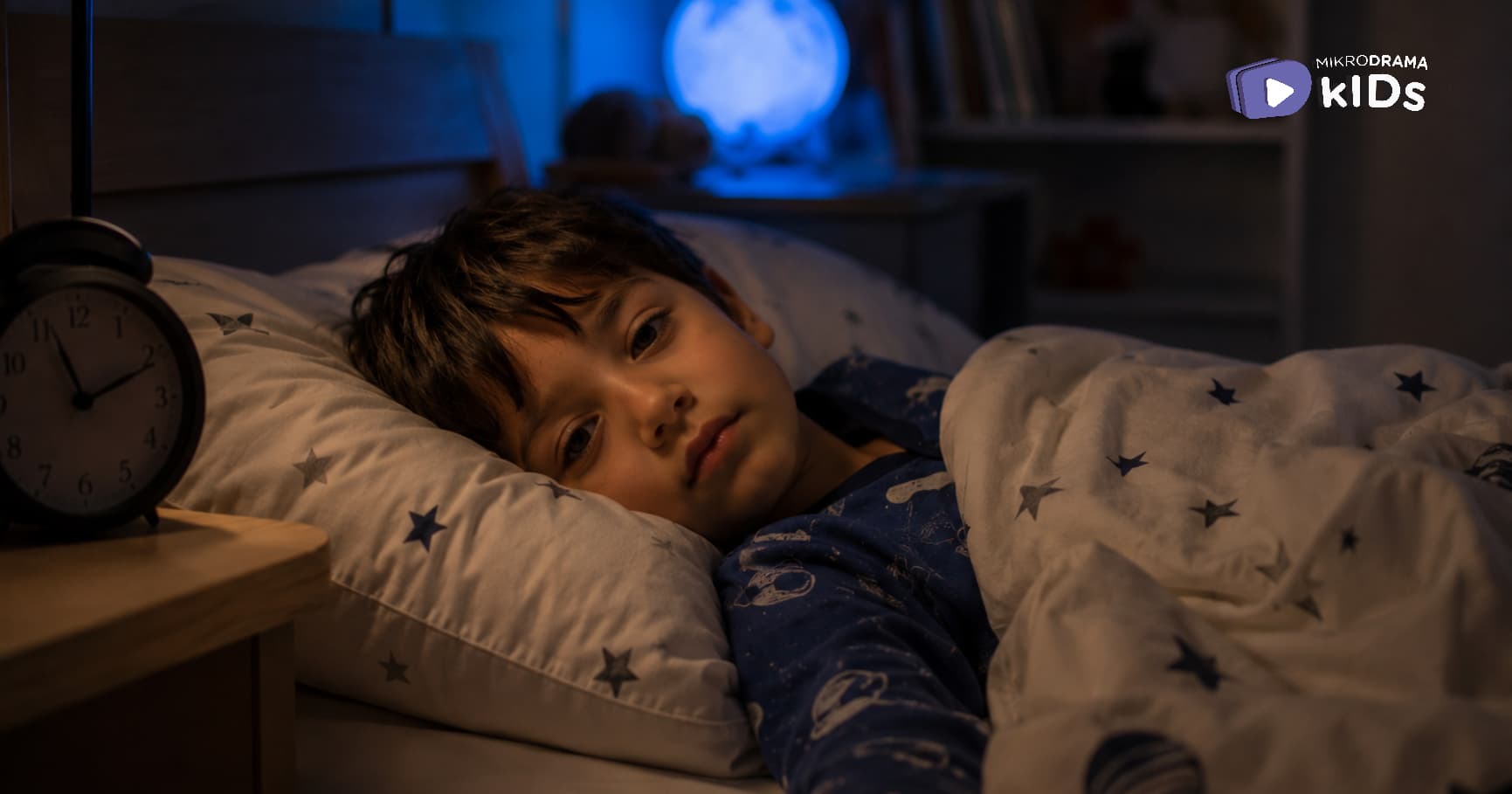
What every parent of a restless child needs to know Your child cannot sit still. They act on impulse. They forget what you just said. They seem distracted all the time. Those are classic symptoms of ADHD. But here is something many parents do not realize. They are also classic symptoms of chronic sleep deprivation.
The overlap is real.
Researchers have found that children who do not get enough sleep often behave in ways that look almost identical to ADHD.
A tired child has trouble paying attention. They get restless and fidgety. They act without thinking. They forget the instructions you gave them two minutes ago. They fall apart over small things.
All of that looks like ADHD. But sometimes the real culprit is simple exhaustion.
One study found that when doctors treated underlying sleep disorders in children, ADHD symptoms dropped significantly. In some cases, children who never actually had ADHD were able to stop taking medication entirely. All because their sleep got fixed.
How much sleep do children actually need?
Here are the recommendations from the American Academy of Sleep Medicine.
Children ages 3-5 need 10-13 hours per day.
Children ages 6-12 need 9-12 hours per day.
Teenagers ages 13-18 need 8-10 hours per day.
Many kids fall short. Screens before bed are a big part of the problem. But early school start times, packed extracurricular schedules, and inconsistent bedtimes also play a role.
What to check before you seek an ADHD diagnosis.
Before you go down the ADHD path, take a close look at your child's sleep.
First, look at duration. Is your child getting the recommended hours consistently? Not just on weekends. Every single night.
Second, look at quality. Do they snore? Wake up frequently during the night? Have trouble falling asleep in the first place? Those could be signs of sleep apnea or other disorders.
Third, look at the bedtime routine. Is there a consistent wind down period without screens? The research on blue light and melatonin is clear. Screens before bed make it harder to fall asleep and stay asleep.
Fourth, look at morning behavior. Does your child wake up easily or fight you every single morning? Difficulty waking is one of the clearest signs of insufficient sleep.
What to do about it.
Try this simple experiment. Prioritize sleep for two weeks straight. Move bedtime earlier. Remove all screens one hour before bed. Create a calm, consistent bedtime routine.
Then watch what happens. If those ADHD like symptoms start to fade, you probably found the real issue.
If sleep is already good and symptoms continue, then further evaluation is worth pursuing. But do not skip the pediatrician. A good clinician will ask about sleep first. If yours does not, bring it up yourself.
A word of caution.
Sleep deprivation does not cause ADHD. ADHD is a real neurodevelopmental disorder with biological roots.
But sleep deprivation can look exactly like ADHD in children who do not have it. And for children who do have ADHD, lack of sleep makes their symptoms significantly worse.
Before you assume ADHD, check sleep first. This one step can save families from years of frustration and unnecessary medication.
A story that might sound familiar
One mother was absolutely certain her son had ADHD. He could not sit still in class. He interrupted constantly. He forgot his homework week after week.
Her pediatrician asked about sleep. It turned out the boy was getting only seven hours a night. He was eight years old. He needed at least nine.
They pushed bedtime back by one hour. They took the tablet out of his room. Within two weeks, his behavior had changed dramatically.
He still had some challenges. No question. But he no longer met the criteria for an ADHD diagnosis. The primary problem had been exhaustion, not neurology.
About Mikrodrama Kids
Mikrodrama Kids creates short form, story driven content for children ages zero to twelve. Our episodes end naturally. No endless scrolling that pushes bedtime later. Because we know that a good night of sleep matters more than any show.
Professional Disclaimer
This article explores the connection between sleep and attention. It is not a substitute for professional medical advice. If you have concerns about your child's attention, behavior, or sleep, please talk to your pediatrician.
Found this helpful?
This article is intended for general informational and educational purposes only. Please read our Blog Disclaimer.
.jpg&w=3840&q=75)


.jpg&w=3840&q=75)