

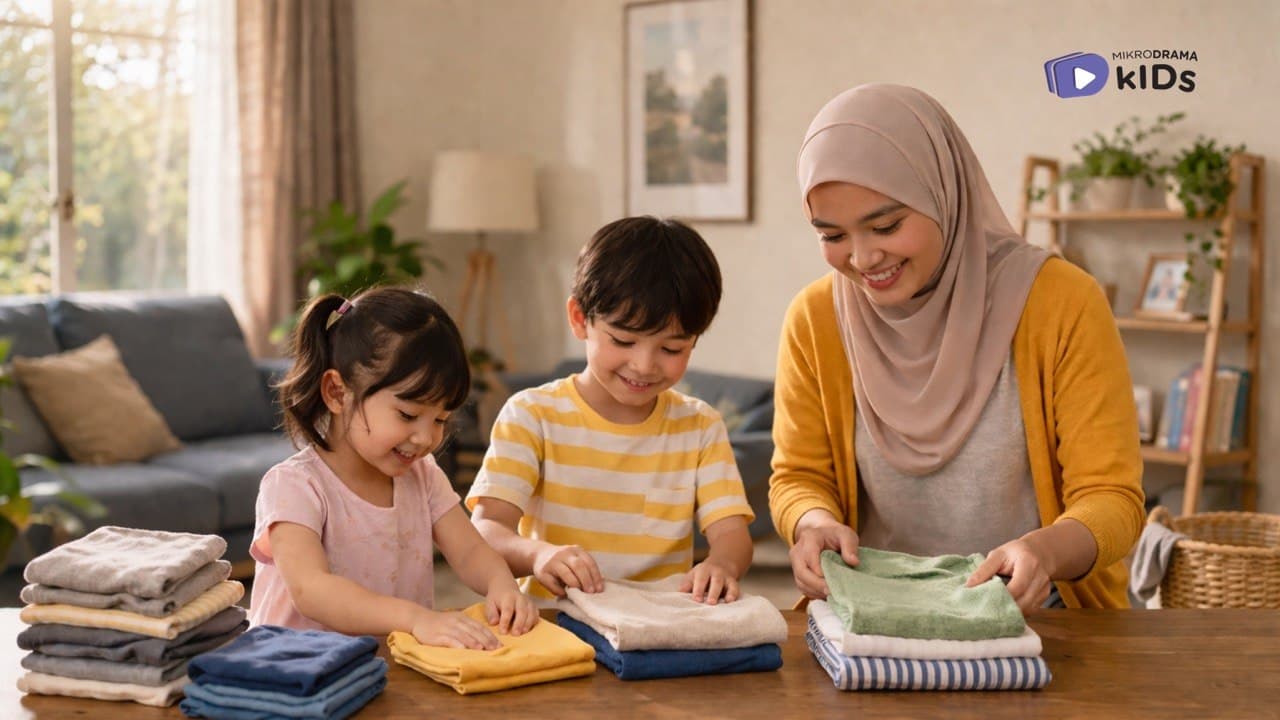
What if one of the most important things we can give our children is not another class? It starts at home — with chores, small responsibilities, and letting them help.
Many of us want our children to succeed.
We send them to school. We buy the books. We look for the best classes. We worry about their future, their confidence, their studies, their friendships, and whether they will be ready for the world one day.
But what if one of the most important things we can give them is not another class?
What if it starts at home?
With chores.
With small responsibilities.
With letting them help.
What the Research Says
There is a long-running Harvard study that followed people across many decades to understand what shaped health, happiness, and success later in life. One of the findings often discussed from this research is surprisingly simple.
Children who learned to take responsibility early — through things like chores, part-time work, school clubs, sports, and helping at home — were more likely to develop stronger habits, better emotional wellbeing, and greater readiness for adult life.
That should wake us up a little.
But Many of Us Are Doing the Opposite
We carry the bag because they are tired.
We clear the plate because it is faster.
We pick up the toys because we cannot tahan the mess.
We tie the shoes because we are rushing.
We do everything because we love them.
But sometimes, without realising it, we are removing the very things that help them grow.
Responsibility Is Practised, Not Taught
A child does not become responsible by being told about responsibility.
A child becomes responsible by practising responsibility.
Again and again.
Putting school shoes back on the rack.
Carrying their own water bottle.
Helping place spoons on the table.
Returning colour pencils after use.
Folding a small towel.
Watering a plant.
Clearing their own plate.
Big Inner Moments
These may look small to us.
But to a child, these are big inner moments.
They are learning, “I can do this.”
They are learning to wait.
They are learning to finish something.
They are learning that the home is not a hotel.
They are learning that they are part of the family, not just someone everyone serves.
Growth Is Messy
And yes, it will be slower.
The water may spill. The clothes may be folded senget. The shoes may not be perfectly arranged. The table may still need another wipe after they are done.
But that is the point.
Growth is messy.
Confidence is messy.
Responsibility is messy at first.
If we only let children do things when they can do them perfectly, they will never get the chance to become capable.
What Are They Practising Every Day?
This is especially important today, when so much of childhood is becoming passive.
Children are watching more. Swiping more. Waiting less. Receiving more. Doing less.
So maybe the real question is not just, “What content are they watching?”
Maybe the question is also, “What are they practising every day?”
Are they practising patience?
Are they practising effort?
Are they practising helping?
Are they practising finishing what they started?
Or are they only practising being entertained?
A Note for Malaysian Parents
As Malaysian parents, many of us grew up helping in small ways. Angkat kain. Susun kasut. Bawa pinggan ke sinki. Tolong jaga adik sekejap. Kemas meja. Sapu sikit sikit.
At the time, it felt normal.
But maybe those ordinary things built something in us that we now need to protect for our children.
Not through shouting.
Not through pressure.
Not by forcing them to grow up too fast.
But through gentle, consistent responsibility.
Tonight, Start Small
So tonight, start small.
Ask them to put their school bag in its place.
Ask them to carry their cup to the sink.
Ask them to return their toys before starting another game.
Ask them to help fold one towel.
Ask them to wait while you finish something.
Then let them try.
Do not rush in too quickly.
Do not correct every small mistake.
Do not take over just because it is easier.
The Real Gift
Because one day, the child who was allowed to help may become the teenager who takes initiative.
The child who learned to wait may become the adult who can handle difficulty.
The child who was trusted with small responsibility may grow into someone who believes, deep inside, “I am capable.”
That is the real gift.
Not a perfect childhood where everything is done for them.
But a childhood where they are lovingly prepared for life.
Sometimes the wake up call is simple.
Give them the chores.
Let them help.
Let them struggle a little.
Let them become capable.
Found this helpful?
This article is intended for general informational and educational purposes only. Please read our Blog Disclaimer.
.jpg&w=3840&q=75)

.jpg&w=3840&q=75)