

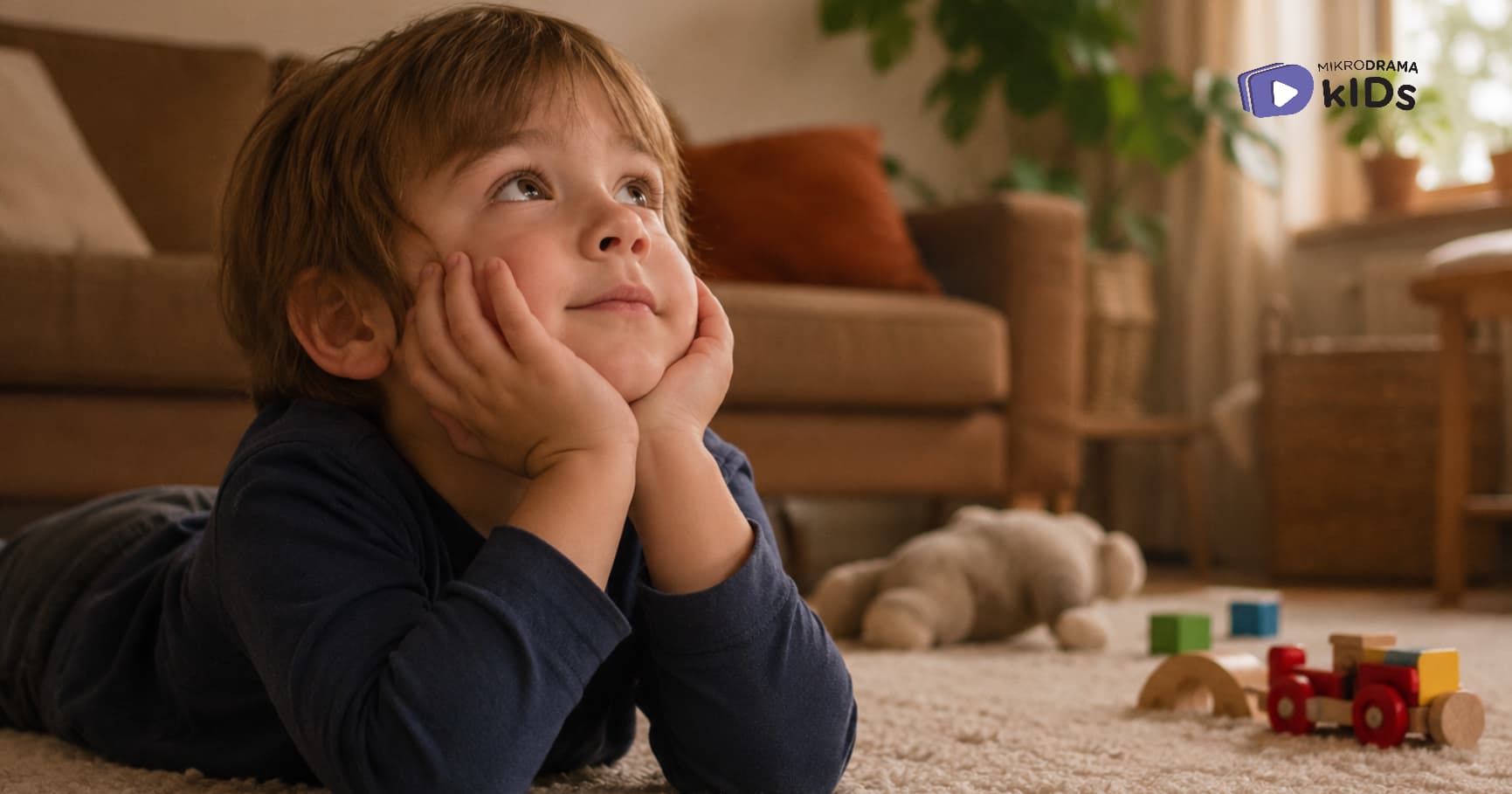
Your child says, "I'm bored." What's your first move? If you're like most parents, you try to fix it. Hand over a tablet. Turn on a show. Suggest an activity. Anything to make that uncomfortable feeling go away. But here's something a lot of parents don't realize. Boredom is actually good for children. Really good. The trouble is, we often confuse two very different states. They look similar on the outside. But inside? Completely different.
Boredom is good for kids. Understimulation is something else entirely.
Let’s break it down.
Two different experiences.
Boredom is when a child has nothing to do and their brain starts to wander. They sigh. Flop on the floor. Complain. It's annoying, sure. But here's the thing. Given time, something interesting happens. Their brain gets uncomfortable enough to invent something.
Understimulation is different. It's when a child's brain craves more input but doesn't know how to find it. This feels restless. Irritable. Sometimes even anxious. The child can't settle. Nothing holds their attention for more than a minute.
One is healthy. The other is a signal.
Why boredom is actually valuable.
It doesn't feel valuable when your child is whining at your feet.
But, boredom sparks creativity. When a child has nothing to do, their brain starts making unexpected connections. They notice details they usually ignore. They invent games. They imagine scenarios. They figure out how to entertain themselves.
Self-entertainment as a skill is one of the most underrated gifts you can give a child.
A child who never gets bored never learns how to fill an empty moment. They always need someone or something else to provide the stimulation.
How understimulation feels different.
Understimulation isn't boredom. It's a restless, almost uncomfortable state. The child wants to do something, but nothing feels right. They switch activities every few minutes. They seem agitated, not just bored.
This can happen for a bunch of reasons:
- They're tired, but not quite sleepy
- They're hungry, but can't figure out what they want
- They've had too much screen time and their brain is overstimulated (ironically, that can feel a lot like understimulation)
- They need to move but are stuck inside
- They're in between activities and their brain hasn't caught up yet
Understimulation is a real need. It's not whining. It's a cry for help finding the next thing.
How to tell the difference.
Ask yourself one question. “If I leave them alone, will they eventually find something to do?”
If yes: They're probably just bored. Give them space. Let them figure it out. The discomfort is the point.
If no: They're likely understimulated. They need a gentle nudge. Not a screen.
What to do for boredom.
Nothing.
Don't fix it.
Let them sit with that uncomfortable feeling. Don't offer solutions. Don't hand over a tablet. Don't turn on the TV.
Within ten or twenty minutes, most kids will invent something. They'll build a fort. Draw a picture. Make up a game. Talk to a stuffed animal.
That's the magic right there. That's creativity being born.
What to do for understimulation.
Offer a starting point. But keep it simple.
Instead of asking "what do you want to do?" which is way too many choices, try something like:
"Let's build a fort."
"I'll set up the play dough."
"Let's go outside for five minutes."
"Can you help me fold the laundry?"
Sometimes a child just needs one small nudge. Once they start, they'll take over from there.
The screen trap.
Here's what happens when you hand over a tablet every time your child says "I'm bored."
You rob them of the chance to practice self-entertainment. Their brain learns a simple equation: uncomfortable feeling equals screen.
That's not their fault. It's what you taught them.
Next time, wait. Let them squirm. Let them complain. Let them be uncomfortable for a little while.
You might be surprised what they come up with.
A real example.
A friend tried this with her five-year-old. He said he was bored. She didn't hand over the tablet. She just said, "Okay."
He whined. He flopped on the floor. He sighed dramatically.
Fifteen minutes later? He had built a whole city out of couch cushions and was flying a stuffed animal over it like a superhero.
He wasn't bored anymore. He just needed time to get there.
When to step in.
There's a limit, of course. If your child is genuinely distressed, crying, hitting, unable to settle after twenty or thirty minutes, that's not boredom. That's something else. Offer a gentle nudge. Check if they're tired or hungry. Help them find a starting point.
But most of the time? A little whining is not a crisis. It's just the sound of a brain learning to wake up.
What to take away from this.
Boredom is not your enemy. It's a tool. It teaches patience, creativity, and self-reliance.
Understimulation is real, and it deserves a gentle response.
But the next time your child says "I'm bored" Don't panic. Don't reach for the tablet. Just say "okay" and see what happens.
You might be amazed.
About Mikrodrama Kids
Mikrodrama Kids is an edutainment platform for children ages 0–12. We create short-form, story-driven content that blends educational research with engaging narratives.
Our mission is to give parents practical tools for healthy media habits and to give kids stories that respect their developing brains. No guilt. No judgment. Just good stories.
Professional Disclaimer
This article discusses developmental concepts of boredom and stimulation. Every child is different. If your child seems persistently dysregulated or unable to self-entertain, consult your pediatrician or a child development specialist.
Found this helpful?
This article is intended for general informational and educational purposes only. Please read our Blog Disclaimer.
.jpg&w=3840&q=75)

.jpg&w=3840&q=75)