

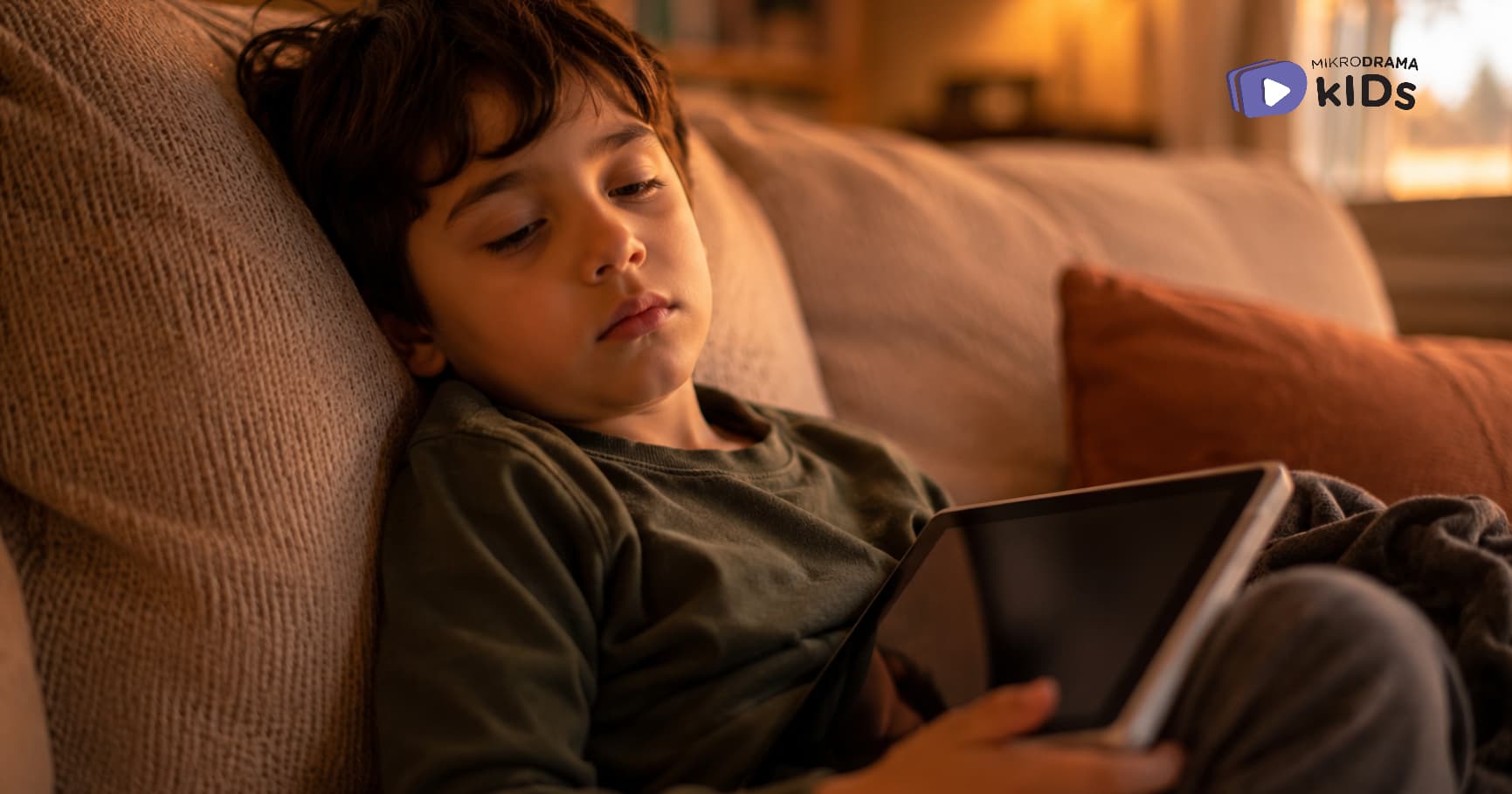
What happens to a child's brain after too much screen time You might've seen it happen. Your child watches a little too much. Then the screen goes off. And suddenly out of nowhere, they're impossible. Cranky. Impulsive. Short-tempered. Melting down because you handed them the wrong color cup. You start to wonder: “Are they addicted? Is this withdrawal?” Probably not. Let me explain why.
The Real Culprit: Cognitive Fatigue.
Here's what's actually going on inside their head.
Even the good, educational, well-intentioned kind of screen time takes real brain energy. Your child is processing images. Following stories. Predicting what happens next. Filtering out distractions. That's not nothing. That's work.
After a long session, their brain is tired. Just like their legs get tired after running.
But here's the thing. Brain fatigue doesn't look like physical fatigue. It doesn't show up as yawning or lying down. It shows up as crankiness. Impulsivity. A complete lack of patience.
Sound familiar?
Why it's not addiction.
Addiction looks different. Withdrawal looks different.
A child who is genuinely addicted to screens will get distressed before the screen turns off. They'll fight you. Cry. Beg for more while the show is still playing.
A child with cognitive fatigue? They're fine during the show. The wheels come off after you take it away. Their brain is just tired. They don't have the energy left to regulate their emotions.
See the difference? One is about craving. The other is about exhaustion.
How long does the hangover last?
Anywhere from twenty minutes to an hour. Sometimes longer if they're already tired or hungry.
During that time, your child isn't being bad. They're not trying to make you miserable. They're just exhausted. Their brain needs time to recover.
This is also why content matters so much.
A child who watches forty minutes of a calm, slow-paced show might be perfectly fine afterward. But a child who watches forty minutes of fast, chaotic, flashy content? They might be a wreck.
Same amount of time. Completely different cognitive load. A completely different hangover.
What you can do about it.
A few small changes can make a big difference.
Shorten the sessions. Twenty minutes is better than forty. Ten minutes is better than twenty. Shorter sessions mean less brain fatigue.
Choose slower content. Fast-paced shows tire the brain faster. Slower stories give the brain room to breathe.
Build in breaks. After one episode, pause. Jump around. Run in place. Get the blood moving. Then decide if they'll watch another.
Don't schedule important things right after. If you know screen time makes your child cranky, don't plan a doctor's appointment or a big conversation immediately afterward. Give their brain time to recover.
Be patient. Their brain is recovering. It's not personal. They're not giving you a hard time. They're having a hard time.
Here's the deal.
One mom said that her son was always a disaster after watching his favorite action show. Every single time. She felt like she was doing something wrong.
Then she switched to a slower, story-driven show. Same amount of time. Same child. Completely different post-screen behavior.
The show changed. Not her son. Not her parenting.
In conclusion, that post-screen crankiness isn't a character flaw. It's not a sign of addiction. It's not proof that you're failing as a parent.
It's a tired brain. That's all.
Shorten the sessions. Choose slower content. Build in breaks. And please give your child a little grace. Give yourself some too.
Their brain is doing its best. So are you.
About Mikrodrama Kids
Mikrodrama Kids is an edutainment platform for children ages 0–12. We create short-form, story-driven content that respects a child's developing brain. No overstimulation. No cognitive hangover. Just good stories that leave your child feeling calm, not cranky.
Professional Disclaimer
This article discusses cognitive fatigue in children. Every child is different. If you have concerns about your child's behavior or screen use, please consult your pediatrician.
Found this helpful?
This article is intended for general informational and educational purposes only. Please read our Blog Disclaimer.
.jpg&w=3840&q=75)

.jpg&w=3840&q=75)