

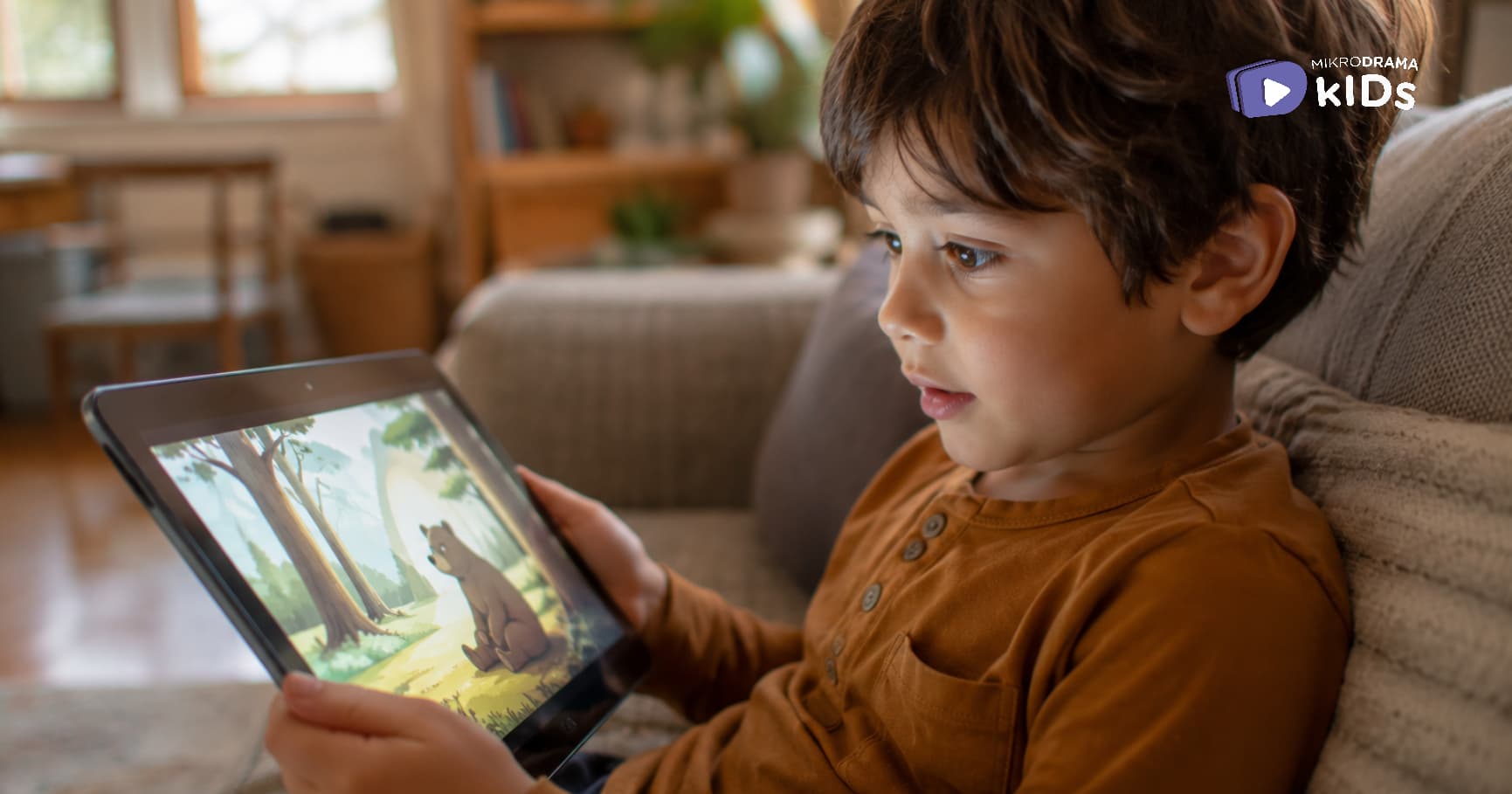
Not all children's shows are the same. You have seen the difference. One show leaves your child calm and engaged. Another leaves them bouncing off the walls. What is happening inside those shows?
What to look for in quality children's content
The problem with fast paced content
Some children's shows are built to be as stimulating as possible. Scenes change every two seconds. Loud sound effects. Bright flashing colors. Characters who shout instead of speak.
These shows grab attention. No question. But they also overstimulate the nervous system. The child is not learning. They are being hijacked.
After watching, they may seem wired, irritable, or unable to focus on anything slower. Their brain has adapted to a frantic pace. Normal life feels boring.
What slow paced stories do differently
Quality children's content moves at a different speed. Scenes last longer. Characters speak at a normal pace. There are pauses. Silence. Room to breathe.
These shows do not grab attention. They invite it. The child chooses to focus because the story is interesting, not because the flashing lights demand it.
The difference is subtle. But the effect on a child's brain is not.
How to spot the difference
Look for these signs of quality content.
Longer scenes. If the camera cuts every few seconds, that is a red flag. Look for scenes that last at least ten seconds.
Natural dialogue. Characters should talk the way real people talk. Not shouting. Not sped up.
Pauses. Silence is not a mistake. It is space for a child's brain to process.
A clear story. A problem. A character who tries something. A resolution. That is a narrative. Random scenes strung together are not.
Gentle sound design. Music that supports the story, not competes with it. Sound effects that are not jarring.
What to avoid
Constant scene changes. Every two seconds or faster is a sign of content designed to hijack attention, not teach.
Loud, jarring sound effects after every action. That is not storytelling. That is a slot machine.
No plot. Just a series of bright images and sounds. Your child is not learning. They are being pacified.
Characters who never face problems or feel real emotions. Stories without struggle teach nothing.
Where Mikrodrama Kids fits in
Every episode of Mikrodrama Kids is slow paced, story driven, and designed to respect a child's developing brain. Longer scenes. Natural dialogue. Pauses. Gentle sound design. A complete story with a beginning, middle, and end.
We do not use flashing lights, rapid cuts, or loud sound effects. We do not need them. A good story holds attention all on its own.
Parents tell us their children are calmer after watching Mikrodrama Kids. Not wired. Not irritable. Just satisfied. Because a good story is satisfying. It does not need to scream for attention.
Try the difference. Watch one episode of a fast paced show. Notice how your child acts afterward. Then watch one episode of Mikrodrama Kids. Notice the difference.
The content matters. Now you know what to look for.
About Mikrodrama Kids
Mikrodrama Kids creates short form, story driven content for children ages zero to twelve. Slow paced. Gentle. Respectful of young brains. No flashing lights, no rapid cuts, no loud sound effects. Just good stories that leave your child calm, not wired.
Professional Disclaimer
This article offers guidance on evaluating children's media content. Every child is different. Trust your own judgment and your knowledge of your child.
Found this helpful?
This article is intended for general informational and educational purposes only. Please read our Blog Disclaimer.
.jpg&w=3840&q=75)

.jpg&w=3840&q=75)