


When you hear the words "screen time," what do you feel? For most parents, it's a small drop in the stomach. A flicker of guilt. But what if the problem isn't the screen? What if the problem is the phrase itself?
A fresh perspective on a tired phrase
Here's a question worth sitting with for a minute.
When you hear the words "screen time," what do you actually feel?
For a lot of parents, it's a small drop in the stomach. A flicker of guilt. That quiet sense that you should probably be doing something else.
The phrase carries weight. It sounds like something to limit. To worry about. To feel bad over.
What if we called it something else?
Call it "story time."
Think about what actually happens when a child watches a well-made show.
There are characters. There's a problem. There's a beginning, a middle, and an end. Your child is following a plot, predicting what happens next, learning about cause and effect.
That's not empty scrolling. That's storytelling.
Human beings have learned through stories for thousands of years. Around campfires. In books. On screens. The format changed. The activity hasn't.
So why not call it what it is? Story time.
Call it "learning time."
Look, not every screen moment is educational. Let's be honest about that.
But sometimes? It genuinely is. A documentary about penguins. A short video about how bridges are built. An episode that explains why the sky is blue.
When that happens, why not name it accurately?
A child who just watched five minutes about how volcanoes work didn't have "screen time." They had a science lesson.
Call it "downtime."
Here's something nobody talks about enough. Adults watch TV to rest.
Most of us don't call it "screen time" when we collapse on the couch after work. We call it relaxing. Unwinding. Taking a break. We don't feel guilty about it. We feel like we've earned it.
Kids need rest too. School is exhausting. Social situations are draining. Their brains work hard all day. Sometimes they just need to stare at something and not think too hard.
Not every screen moment has to be productive. Sometimes it's just quiet. And quiet is allowed.
Call it "connection time."
This one might be the most important.
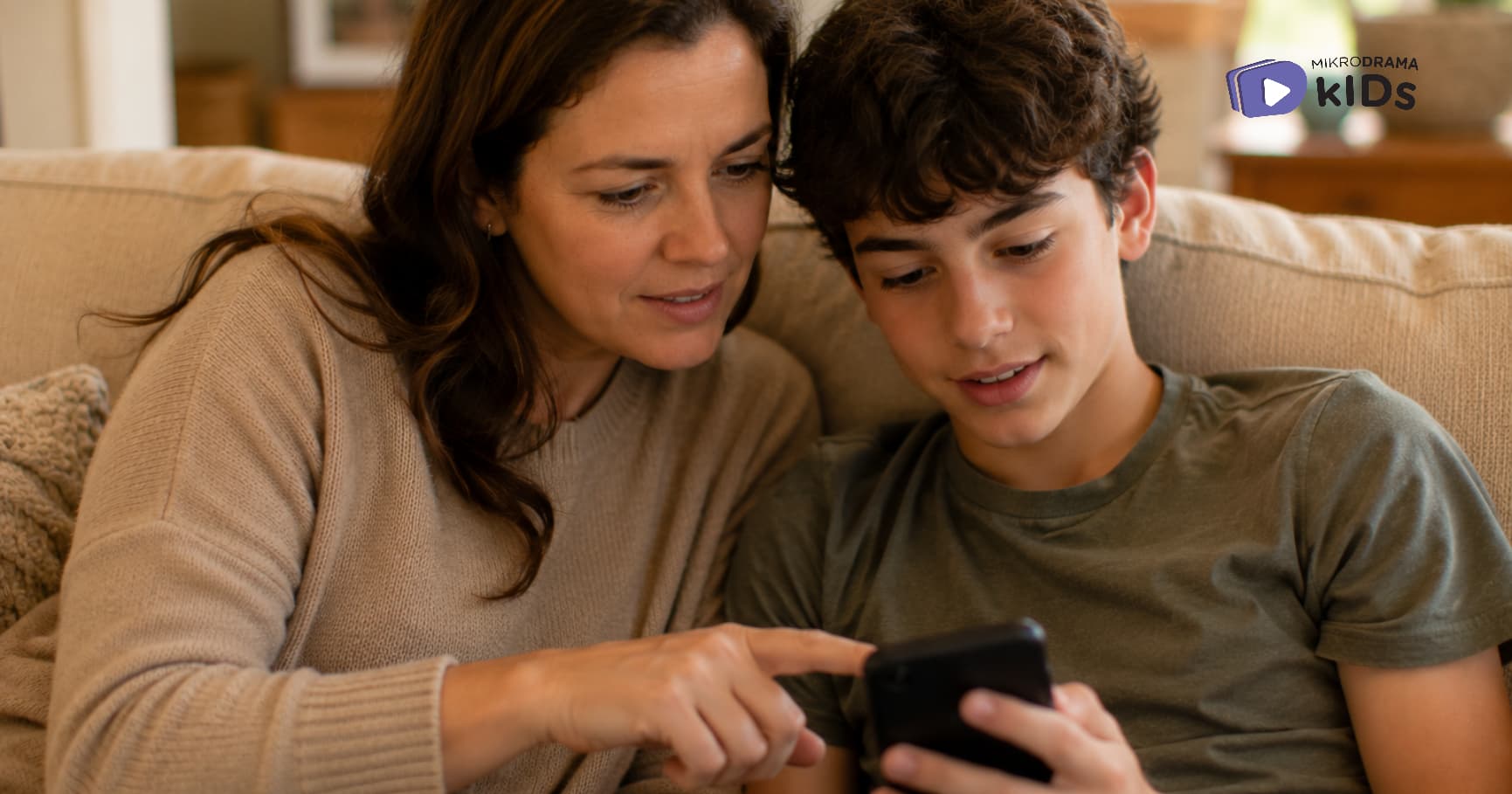
When you watch with your child, pausing to ask questions, laughing at the same joke, talking about what just happened, that's not isolation. That’s connection.
Shared stories build relationships. Inside jokes form. Favorite characters become part of your family's vocabulary.
Those aren't screen memories. They're just memories.
The problem with one label.
The real issue isn't the screen. It's the single, heavy label we stick on everything that happens on it.
One word. "Screen time." It covers everything from a quiet nature documentary to a loud, chaotic toy unboxing. It covers independent play and shared family viewing. It covers deep learning and passive zoning out.
That's like calling broccoli and cotton candy the same thing because they're both food.
They're not the same. And most parents know it.
A simple experiment to try.
For one week, try something different. Instead of saying "screen time," name what's actually happening.
"Time for a story."
"Let's watch a learning video."
"We need some quiet downtime."
"Come watch this with me."
Notice how different those phrases feel. Not heavier. Lighter. More specific. More honest.
The shift might surprise you. Not because anything changed on the screen. Because the story you tell yourself about it changed.
And sometimes? That's all it takes.
Professional Disclaimer
This article offers a fresh way to think about screen time language. It's not meant to replace professional advice on child development, screen use, or digital media habits. Every family is different. Trust your own judgment and values.
Found this helpful?
This article is intended for general informational and educational purposes only. Please read our Blog Disclaimer.
.jpg&w=3840&q=75)

.jpg&w=3840&q=75)