

The frightening reality behind viral clips, endless feeds, and what parents can no longer afford to ignore about children's digital habits.
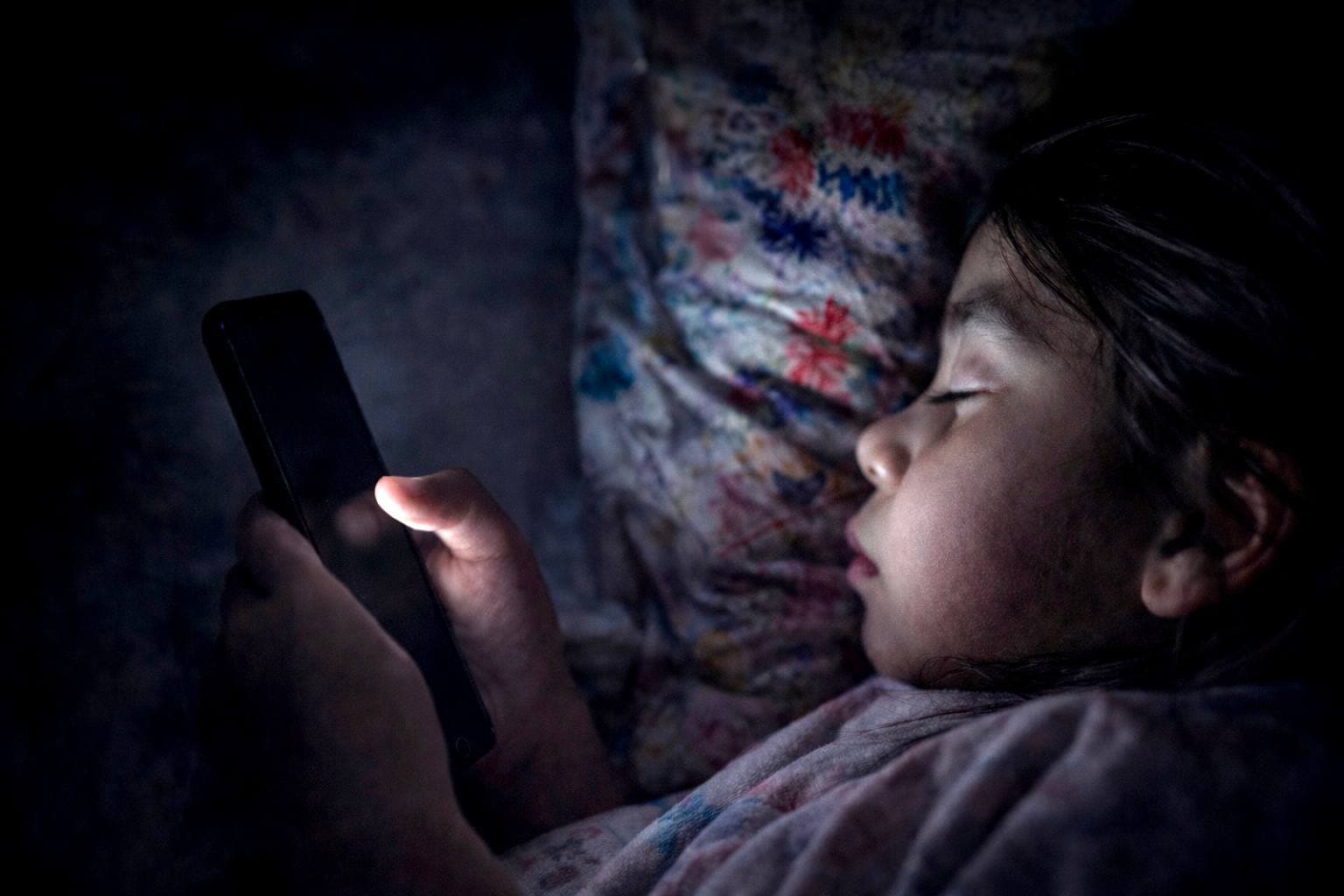
A child in bed. Eyes closed. Thumb still moving.
That is the kind of image that stops a parent cold.
A video now circulating online appears to describe a young child still swiping through short videos while seemingly asleep. The video cannot be verified alone, but that is not the point that matters.
What matters is that many parents instantly believe it could happen.
And that says everything.
Because deep down, families already know something is wrong with the way many digital platforms are shaping children's habits. They know the issue is no longer just whether a child is watching "something harmless." The issue is that many platforms are built to remove stopping points, reduce self-regulation, and keep attention moving in one direction only: forward. The American Academy of Pediatrics now explicitly advises parents to look beyond time alone and focus on the quality of media use, the content, the context, the communication around it, and whether it crowds out sleep, movement, and other essentials of healthy development.
The Real Danger Is Not Only What Children Watch
Many parents still think the key question is whether the content looks educational, colourful, safe, or child-friendly.
But that is no longer enough.
A seemingly harmless video can still sit inside a deeply unhealthy system. If the platform is designed around autoplay, constant recommendations, endless scrolling, and frictionless continuation, then the child is not just consuming content. The child is being trained into a pattern.
That pattern says:
Keep going.
Do not pause.
Do not stop.
There is always one more.
This is exactly why international regulators and child safety advocates have increasingly shifted their focus from content alone to platform design itself. In July 2025, the European Commission's guidelines on the protection of minors under the Digital Services Act specifically called on platforms to disable by default features that contribute to excessive use, including autoplay and push notifications, and to remove persuasive design features aimed mainly at engagement. The same guidelines explicitly warn about problematic and addictive behaviours and recommend changes to recommender systems so children are less likely to get pulled into harmful rabbit holes.
Why the Viral Image Feels So Disturbing
The video is frightening because it suggests something every parent fears: that a device is no longer being used consciously, but almost reflexively.
Even if the exact clip turns out not to be what it claims, the emotional reaction to it is still revealing. Parents are not shocked because the idea feels impossible. They are shocked because it feels plausible.
And it feels plausible because so many adults have already seen smaller versions of the same pattern in their own homes.
The child who says "just one more" ten times.
The child who becomes distressed when the feed stops.
The child who reaches for the device before reaching for a toy, a book, or a conversation.
The child whose body is in bed, but whose brain is still being pulled by the rhythm of the screen.
That concern is not paranoia. Public health research continues to link heavier screen use with later bedtimes, insufficient sleep, reduced sleep efficiency, insomnia symptoms, excessive daytime sleepiness, and irregular sleep routines. A 2025 CDC analysis also found that high daily screen time among US teens was associated with being infrequently well rested, irregular sleep routines, and higher rates of anxiety and depression symptoms, while noting that content and quality of use also matter.
Children Do Not Just Watch Content. They Learn the Pattern Around It
This is the part many adults miss.
A child does not only absorb the story on the screen. A child also absorbs the rhythm around the screen.
If the experience always ends, the child learns that media has a beginning and an end.
If the experience never ends, the child learns that stopping feels unnatural.
If every pause is immediately filled by another recommendation, the child begins to expect constant stimulation.
That expectation does not stay inside the device. It spills into real life.
Suddenly, slower activities feel flat.
Books feel harder.
Waiting feels harder.
Sleep feels harder.
Boredom feels unbearable.
Quiet feels uncomfortable.
That is one reason the AAP now advises families to think about balance, co-viewing, content, and communication, rather than only counting hours. The goal is not just less media. The goal is healthier media habits that do not displace the building blocks of childhood.
The Younger the Child, the Greater the Responsibility
For very young children, this responsibility becomes even more serious.
The World Health Organization's guidance for children under five is clear that sedentary screen time should be very limited, with no sedentary screen time recommended for 1 year olds, and no more than 1 hour for 2 year olds, with less being better. The larger point in those guidelines is not anti-technology for its own sake. It is that healthy development depends on sleep, active play, movement, caregiver interaction, and a balanced daily rhythm.
That matters because many families are not handing children a device for a few contained minutes anymore. They are handing over access to systems specifically engineered to keep delivering the next stimulus.
Those are very different things.
This Is Where Parental Ignorance Becomes Risk
That may sound harsh, but it needs to be said clearly.
A device is not a neutral babysitter.
Passing a child a phone or tablet without thought, boundaries, curation, or supervision is no longer a minor parenting shortcut in a difficult moment. In the worst cases, it becomes an act of digital neglect.
Not because every child will spiral.
Not because every screen is dangerous.
But because many parents still underestimate what they are placing in a child's hands.
They think they are giving a device.
In reality, they may be giving access to a behavioural system built around compulsion.
That is why UNICEF Malaysia has said age restrictions alone will not keep children safe online and has called for stronger platform responsibility, better moderation, and safer design. The burden should not fall entirely on parents to fight manipulative systems alone, but parents still need to understand the systems their children are being exposed to right now.
What Infinite Scrolling Can Lead To
Let us be careful here.
It would be irresponsible to say that infinite scrolling alone causes a child to swipe while asleep, or that one viral clip proves a clinical condition. The evidence does not support that kind of dramatic certainty.
But it is responsible to say this:
Endless feeds, autoplay, targeted recommendations, and low-friction content loops can normalise prolonged, repeated, difficult to interrupt use. Those design choices are widely recognised by regulators and child safety groups as features that contribute to excessive engagement and problematic habits.
And when that kind of repeated engagement collides with tired children, bedtime device access, weak boundaries, and constant stimulation, the result can be deeply unhealthy routines that parents should not dismiss as "just a phase." Night-time device use is especially concerning because screen exposure can delay sleep and affect alertness and circadian timing.
Parents Need a Wake-Up Call, Not More Reassurance
This is that wake-up call.
If a child's device use is already starting to feel automatic, emotionally charged, difficult to interrupt, or woven into bedtime, then the family should not wait for a more frightening moment to take it seriously.
Do not wait for complete dependence.
Do not wait for sleep disruption to become normal.
Do not wait until real life feels less interesting to your child than the next swipe.
The earlier a family steps in, the better.
What Responsible Digital Use Should Look Like
Responsible digital use for children should mean:
The content is curated.
The session has a beginning and an end.
The platform does not push endless continuation.
The child is not left alone for long periods inside a feed designed to keep serving the next thing.
The device does not dominate bedtime.
The child's digital life still leaves room for books, play, movement, mess, imagination, and rest.
This is not about banning devices from reality. It is about refusing to surrender childhood to badly designed digital systems.
Why a Platform Like Mikrodrama Kids Matters
This is precisely why a platform like Mikrodrama Kids matters.
Because the answer is not pretending devices will disappear.
They will not.
The answer is building better digital environments for children inside the world we actually live in.
A child-focused platform should not behave like mainstream platforms built around infinite scrolling, compulsion, and retention at all costs.
It should be curated.
It should be intentional.
It should be age-conscious.
It should support healthy stopping points.
It should respect childhood.
It should help parents feel safer, not more uneasy.
Mikrodrama Kids exists around that belief.
Not to trap children on screens longer.
Not to turn the next swipe into the next habit loop.
But to offer a more thoughtful use of digital devices in a world where children will inevitably encounter them.
That difference matters enormously.
Because once a platform is designed around endless continuation, the child is no longer simply watching.
The child is being shaped by the loop.
The Question Every Parent Should Now Ask
Not:
Is my child quiet with the device?
But:
What is this device experience teaching my child to become used to?
Because that is the real issue.
And if more parents begin asking that question honestly, a great many digital habits may change before something frightening becomes normal.
Explore more from Mikrodrama Kids as we continue speaking openly about digital wellbeing, safer storytelling, healthier platform design, and what it really means to protect childhood in a screen-filled world.
Found this helpful?
This article is intended for general informational and educational purposes only. Please read our Blog Disclaimer.
.jpg&w=3840&q=75)

.jpg&w=3840&q=75)