

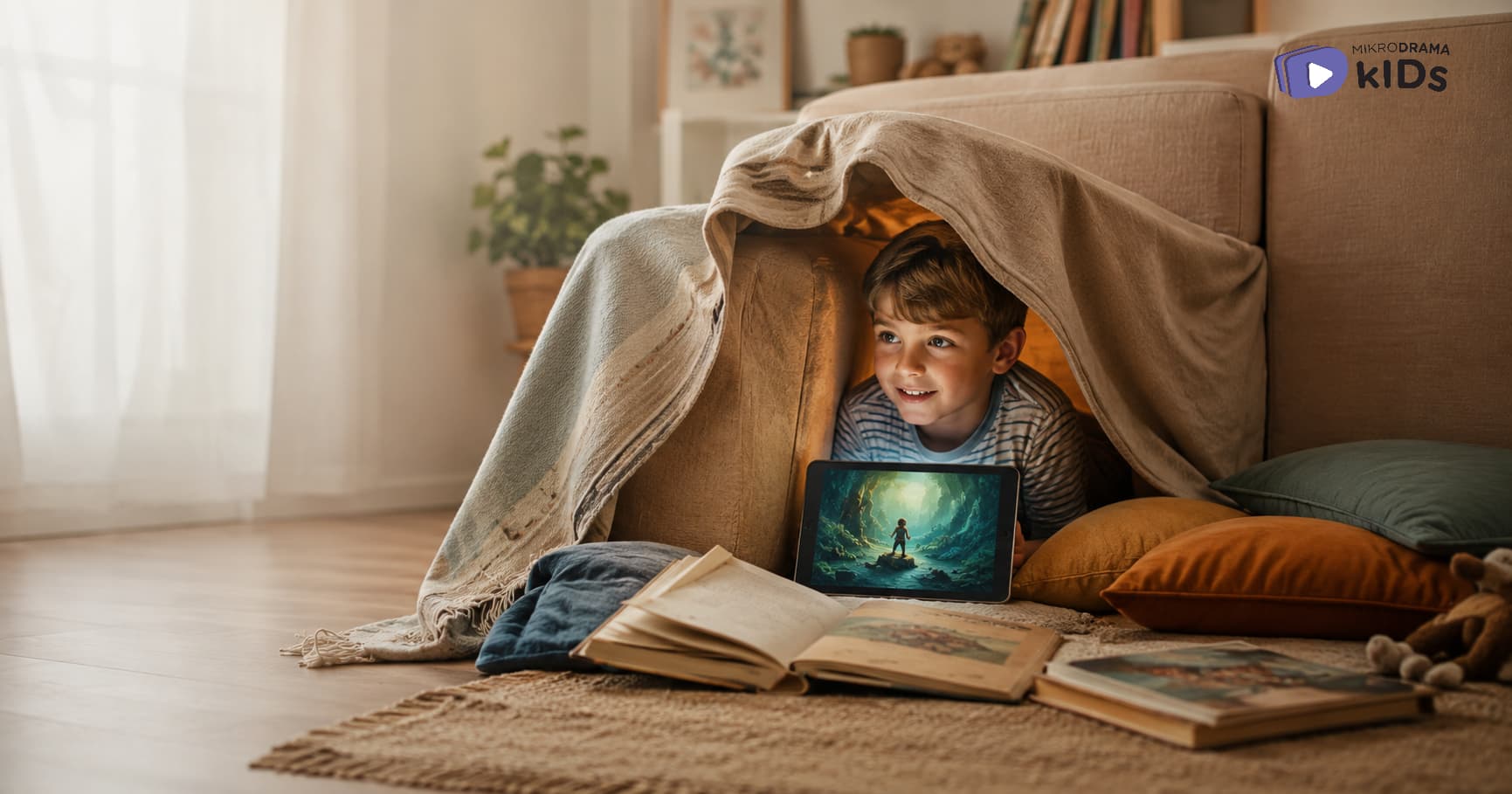
Kids love being a little scared. That's why they hide behind a blanket but never ask you to turn off the show. Psychologists call it "safe danger." The same reason adults ride roller coasters. You feel the fear, but you know you're okay. Adventure stories give kids a safe place to practice. Darkness. Getting lost. Failing. The hero always finds a way out. That's not scary. That's bravery practice.
The Scene You Know Well
Picture this.
Your child is watching an adventure story. The hero creeps into a dark cave. The music shifts to tense, slow and deliberate. A shadow moves in the background.
Your child pulls the blanket up to their chin. They lean closer to you. Maybe they even cover their eyes.
But here's the thing. They don't ask you to turn it off.
And when the scene ends? They want to watch it again.
So what's actually going on here?
The Truth About "Good Scares"
Psychologists actually have a name for this. It's called benign masochism. Fancy term, simple idea.
It means enjoying something that feels a little negative or uncomfortable because deep down, you know you're safe.
Adults do it all the time. Roller coasters. Horror movies. Thriller novels. We get the rush of fear without any real danger.
Kids aren't so different. They crave what you might call "good scares", those moments of suspense and tension that eventually resolve safely.
And adventure stories? They're full of them.
Why Kids Seek Out Safe Danger
There's a reason most adventure stories follow the same basic pattern. A hero faces a problem. Runs into obstacles. Overcomes them. Returns changed.
That pattern gives kids something they really need: a rehearsal space for real-life fears.
Here are some common childhood fears and how adventure stories help children rehearse them.
Being lost. The hero gets separated from their group and finds their way back. Your child learns that separation is temporary and solutions exist.
Darkness. The hero enters a dark place and realizes it's not as scary as they thought. Your child learns that fear of the unknown often fades once you take a closer look.
Being chased. The hero outruns a threat by thinking quickly. Your child learns that panic isn't the only option, clever thinking works too.
Failing. The hero tries something, fails, and tries again. Your child learns that failure is not the end. It's just a step.
Being alone. The hero solves a problem without help and builds independence. Your child learns that they are more capable than they think.
Each of these moments triggers a mild fear response. But here's the key. Because the story isn't real and the ending is safe, your child's brain learns something powerful: I can feel scared and still be okay.
The Difference Between "Good Scares" and Bad Ones
Not all suspense is created equal. Here's how to tell the difference.
Good scares:
- The hero is in danger, but you trust they'll be fine
- Tension builds and then resolves
- The child feels scared with the hero
- The child can look away and feel safe
- The scary thing is a situation, not a monster
Bad scares:
- Genuinely violent or traumatic content
- Tension builds and never resolves
- The child feels scared of the story
- The child feels trapped with no escape
- The scary thing is graphic or mean-spirited
Well-made adventure stories for young children understand this balance. The cave is dark, but the hero finds a flashlight. The character gets lost, but they find a friendly helper.
The tension feels real. The resolution feels warm.
What This Looks Like in Real Life
You might notice your child doing some of these things during a "good scare" moment.
Moving closer to you. They're looking for safety. Your presence is their anchor.
Asking questions. "Is he okay?" "What happens next?" They're processing the tension out loud.
Watching the same episode over and over. They're mastering the fear. Each viewing builds confidence.
Acting out the story afterward. Pretending to be the brave hero is how they internalize courage.
Talking about the "scary part" with excitement, not distress. That's the sign of a healthy "good scare." They're thrilled, not traumatized.
These are all signs of healthy engagement. Your child isn't being traumatized. They're practicing.
How to Support Your Child Through "Good Scares"
A few simple things can make a big difference.
Don't skip the tense parts. Let them sit with the build-up. That's where the learning actually happens. If you fast-forward or change the channel, you rob them of the resolution.
Stay close. Your presence is their safety net. A hand on the shoulder or a quiet "they're going to be okay" goes a long way.
Name the feeling. Try something like: "That part felt a little scary, didn't it? But the hero found a way eventually." Naming emotions helps children understand what they're experiencing.
Let them rewatch. Each viewing builds mastery. What felt scary the first time often feels exciting by the fifth. Repetition is how children learn.
Watch their cues. If your child seems genuinely distressed, not just tense but truly upset, pause and check in. Every kid has a different threshold. There's no one-size-fits-all.
The Connection to Real-Life Bravery
Here's the beautiful part.
A child who has watched a hero walk into a dark cave and come out safe? That child has rehearsed bravery.
They've felt fear in a safe container. They've seen a character take a breath and move forward anyway. They've learned that scary moments end.
And one day, when they face their own dark cave, whether it's a new school, a tough conversation, a first sleepaway camp, that rehearsal matters.
"I can do this. I've seen someone like me do it before."
That's not just entertainment. That's emotional preparation.
What to Remember
Adventure stories with "good scares" aren't hurting your child.
They're helping them.
They teach courage. Build resilience. Show that fear is something you can feel and still survive.
So the next time your child hides behind a blanket during a tense moment? Smile. Pull them closer. And keep watching.
They're not scared. They're learning to be brave.
About the Author
Mikrodrama Kids creates short-form adventure stories for children ages 0–12. Every episode balances excitement with emotional safety, giving kids the thrill of a good scare and the comfort of a happy ending.
Professional Disclaimer
This article is for informational purposes only and is not intended as professional psychological or developmental advice. Every child is different. If you have concerns about your child's emotional responses to media, please consult a pediatrician or child development specialist.
Found this helpful?
This article is intended for general informational and educational purposes only. Please read our Blog Disclaimer.
.jpg&w=3840&q=75)

.jpg&w=3840&q=75)